
Overview
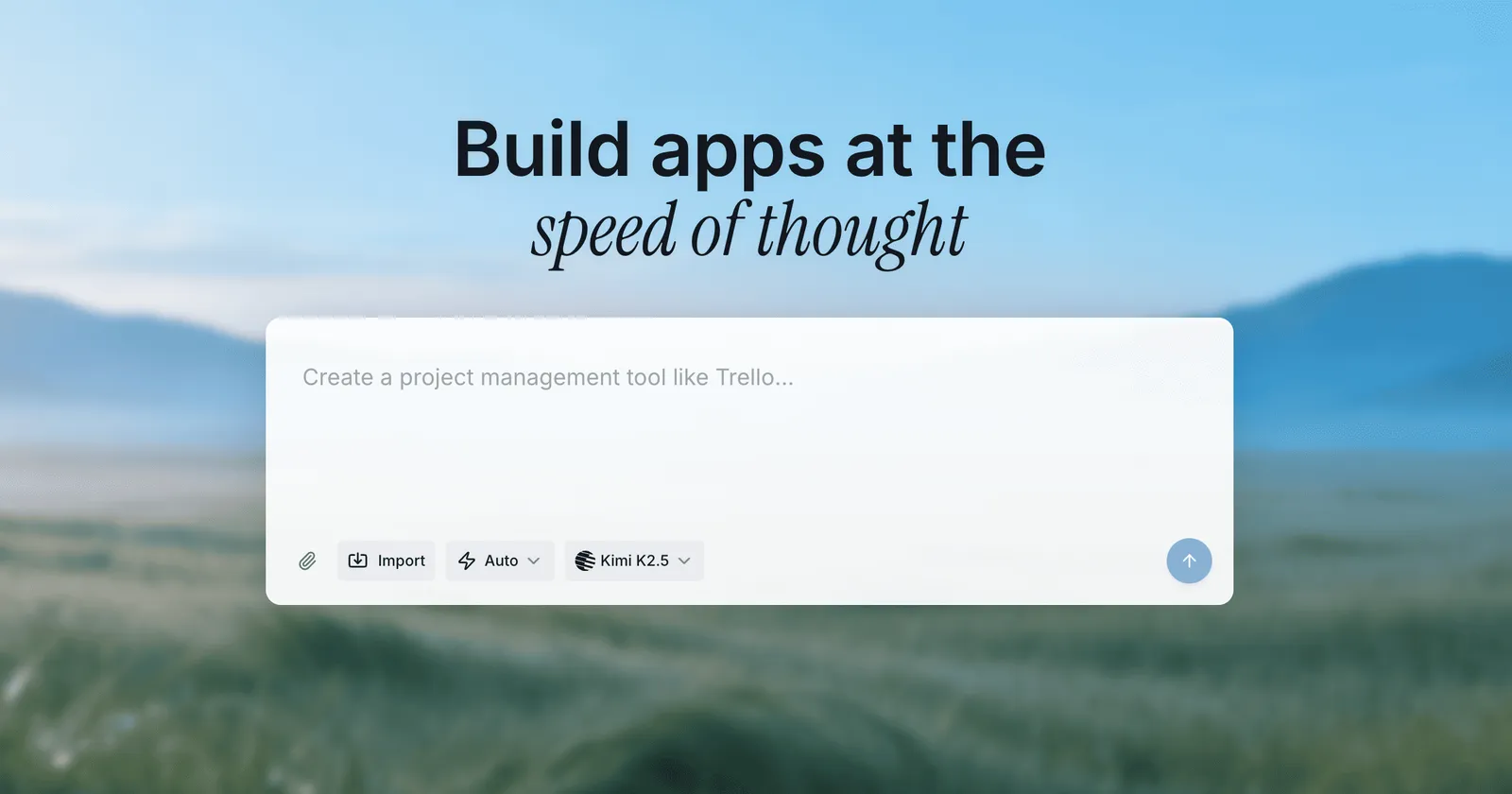
Ideavo is a free artificial intelligence application builder that converts natural language chat prompts into production ready software, including websites, mobile applications, internal tools, dashboards, games, and minimum viable products. The platform positions itself as a full stack development environment in which the conversational interface doubles as the integrated development environment, an approach the company markets as a "Vibe-IDE."
The product addresses a deliberately broad audience. Founders, product managers, non technical builders, agency owners, and professional software engineers all feature in the company's stated user base. Ideavo reports that individuals at Amazon, Microsoft, LinkedIn, Flipkart, PhonePe, Adobe, Google, Notion, Slack, Databricks, Atlassian, and Spotify use the tool, a signal that the platform has reached both large enterprise teams and independent builders.
Unlike many competing AI coding platforms that bundle model access into a metered subscription, Ideavo has adopted a bring your own key model. Users connect their own API credentials or existing subscriptions from providers such as OpenAI, Anthropic, Google, OpenRouter, OpenCode, or Kimi, and the platform charges nothing on top. That positioning places Ideavo in direct competition with Lovable, Bolt.new, v0.dev, Replit, and Emergent, with the differentiators being cost structure, code portability, and provider neutrality.
Headquarters, founding year, and team size are not disclosed on the public landing page, which is a notable gap for buyers who weigh vendor transparency heavily during procurement.
Services & Expertise
Conversational Full Stack App Generation The platform's core capability is generating complete applications from a chat thread. A user describes the product they want, and Ideavo produces frontend code, backend logic, and the wiring between the two. The deliverable is a runnable application rather than a static mockup, which matters for founders validating an idea before committing significant engineering resources. The company emphasizes that output is production ready, not merely a prototype shell.
Automatic Backend Provisioning Authentication, database schema, payment processing, and business logic are generated automatically as part of the build. Rather than requiring separate configuration of services such as an identity provider, a relational database, and a payments processor, Ideavo assembles these components while the user describes the product. The outcome is a functional backend that would otherwise consume days of scaffolding work, and it removes a common blocker for builders without backend experience.
Multi Provider Model Connectivity Ideavo accepts API keys or existing subscriptions from OpenAI, Anthropic, Google, OpenRouter, OpenCode Zen, Kimi, and other providers. Users route requests to the model of their choice without any platform markup. The practical benefit is cost control and the ability to lean on free tier models from third party gateways during development, then switch to a premium model for production work as needed.
Cross Platform Deployment A single workflow targets web, mobile, and game projects. According to the company, generated code ships to each target platform with zero configuration. In practice this means a builder can begin with a web application and extend toward mobile or a browser based game without rewriting the underlying logic from scratch, which preserves engineering effort as ambitions grow.
Deployment and Repository Integration Projects can be imported from an existing codebase, exported to GitHub, deployed to Vercel or Railway, and connected to custom domains. These integrations are surfaced inside the platform rather than handled through external tooling or manual scripting. The value here is continuity: teams are never locked into a proprietary hosting vendor and can retrieve their code at any point and continue working elsewhere.
Parallel Agents, MCPs, Skills, and Workflows Ideavo supports multi step automation chains, context aware tool servers conforming to the Model Context Protocol, reusable skills, and parallel agent execution. These capabilities target more advanced users who want to orchestrate several automated tasks concurrently rather than issuing single sequential prompts. For agencies and engineering teams, this opens the door to automating repetitive build tasks across many projects at once.
Team Collaboration Teammates can be invited into shared sessions where changes appear live for everyone in the workspace. This shifts Ideavo from a solo productivity tool into something closer to a collaborative development environment, and it suits teams that want multiple stakeholders reviewing or contributing to the same build in real time.
How They Work
The engagement begins in the browser. A prospective user opens Ideavo, describes the application they want in plain language, and the platform begins generating a project. There is no sales call, onboarding form, or implementation fee, which reflects the self serve and product led nature of the business.
Once a project exists, the user connects a model provider by supplying an API key from an external service. Ideavo supports OAuth based sign in for some providers and manual key entry for others. From that point forward, the platform routes generation requests through the user's chosen model with no additional markup attached.
Building proceeds through iterative chat. Users request changes, and the platform applies them to the live codebase. Backend services, including authentication, database, and payments, are generated alongside frontend components. Team members can be added to a session at any point, and every participant sees edits in real time.
When the application is ready, deployment flows through integrated hooks to Vercel, Railway, and GitHub. Existing repositories can be imported the same way, allowing teams with established codebases to bring their work into Ideavo rather than starting fresh. Documentation for these workflows lives at the company's technical documentation site.
The Agent+ tier appears to extend the base platform with more advanced agent orchestration, including parallel execution and the skills and workflow systems described above, aimed at power users managing multiple concurrent builds.
Ideal Client Profile
Early Stage Founders Validating an MVP. A solo founder with a product hypothesis needs a working prototype to show investors or test demand. Ideavo compresses a process that would normally take several weeks into a single session, and the free pricing model removes upfront cost risk at the earliest and most uncertain stage of a company.
Product Managers Without Engineering Support. A product manager at a mid sized company wants to demonstrate a feature concept before filing engineering tickets. Ideavo lets that manager produce a functioning prototype in hours, which makes resourcing and prioritization conversations concrete rather than abstract and speculative.
Agencies Delivering Client Work at Scale. A digital agency taking on more projects without expanding headcount fits the platform's stated agency owner profile. Rapid delivery of client sites, tools, and internal dashboards cuts build cost per engagement and improves margin without requiring new hires.
Non Technical Builders with a Clear Vision. Individuals with domain expertise but no coding background represent a stated target segment. The travel blogger testimonial on the site is a representative example of this group, and the free entry point makes experimentation low risk for people testing a first idea.
Engineering Teams Seeking Boilerplate Reduction. Professional developers who want authentication, database scaffolding, and permission layers generated automatically can treat Ideavo as an accelerant rather than a replacement for their existing workflow. The enterprise feature set, including SOC 2 certification, SSO, and audit trails, speaks directly to this audience and to the security reviewers who approve their tools.
Pricing & Engagement Models
Ideavo is free to use. The company is explicit about the reason: it cannot out subsidize large AI laboratories, so instead of absorbing model costs it asks users to bring their own API key or subscription. This eliminates the per seat subscription that competing platforms typically charge and shifts variable cost directly to the user's chosen provider.
Because model access is external, total cost depends on usage volume and the provider selected. Users routing through free tier models from gateways such as OpenRouter or OpenCode can operate at effectively zero marginal cost during development and testing. Heavier production workloads will incur provider charges proportional to token consumption, so budgeting requires some estimation on the user's side.
There is no credit card required to begin, and the platform is described as completely free. Detailed tier information is published on the company's pricing page, while broader product announcements and updates appear on the Ideavo blog. No public retainer, hourly, or project based engagement options are documented, which confirms the product is sold as self serve software rather than managed services.
Editorial Assessment
Ideavo's strongest differentiator is structural rather than cosmetic. By removing the model markup and letting users bring their own provider credentials, the platform sidesteps the cost inflation that plagues many AI coding tools once usage scales. Equally important, the ability to export code to GitHub and deploy to Vercel means users are never locked in, a meaningful advantage over walled garden competitors that keep generated code inside their own environment.
The platform also carries credible enterprise signals, including SOC 2 certification, encryption at rest, SSO, and audit trails. That is unusual for a free product and suggests the company is courting larger accounts rather than only hobbyists and side project builders.
The trade offs are worth naming. Requiring users to manage their own API keys adds a configuration step that less technical buyers may find intimidating, and total spend becomes less predictable because it depends on an external provider. Company details such as founding year, headquarters, and team size are not published, which limits the transparency that enterprise procurement teams often expect. Pricing detail beyond "free" is also thin, making total cost of ownership harder to forecast for larger teams.
The best fit is a builder who values control, portability, and low fixed cost over the hand holding of a fully managed subscription. Founders, agencies, and engineering teams comfortable with API keys will get the most from the platform. Those who prefer a single predictable bill and do not want to touch provider credentials may find competing platforms easier at the outset.