
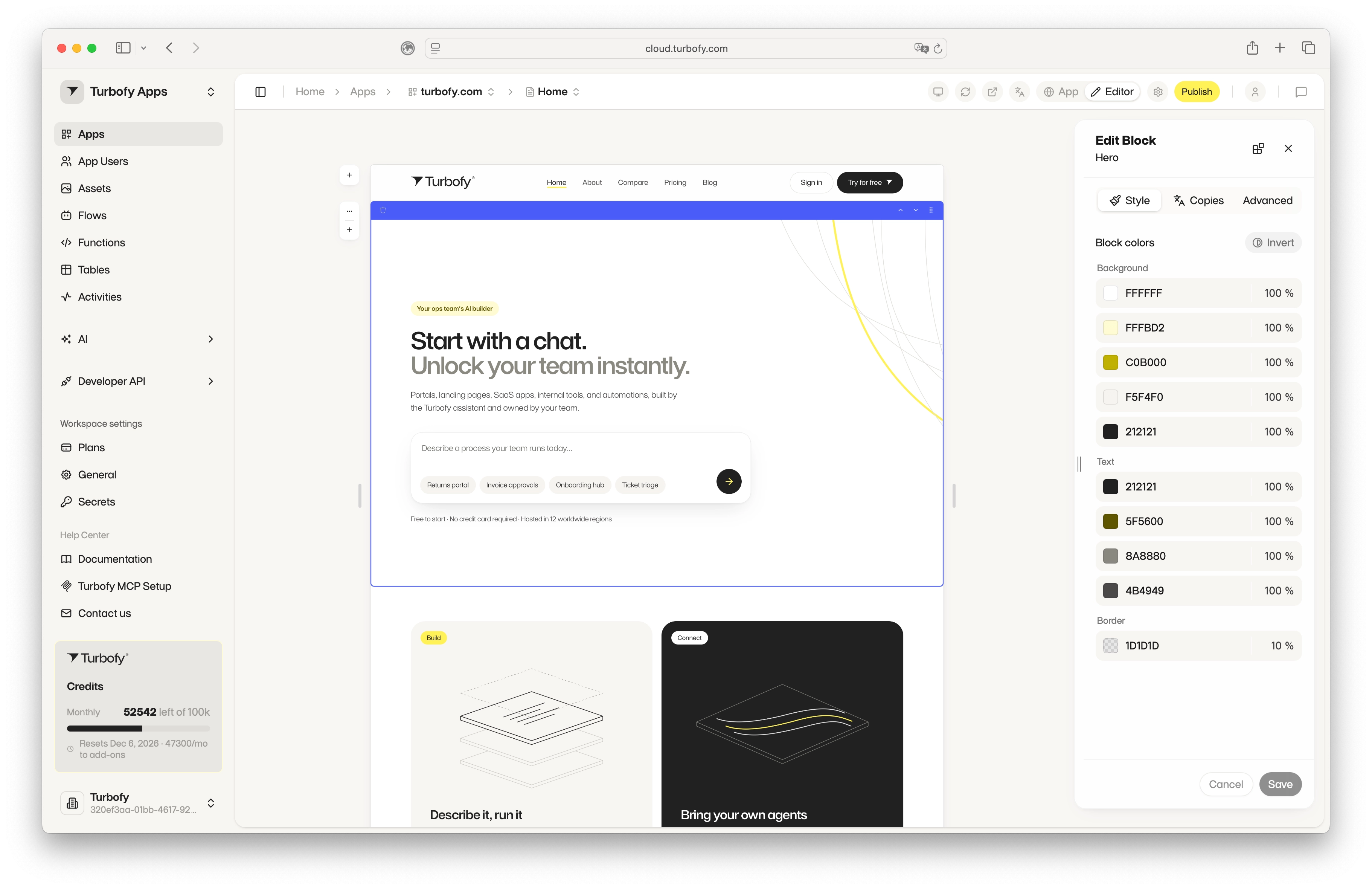
Turbofy is a developer-focused technology platform designed to make building and launching software applications easier, faster, and more efficient. It addresses one of the biggest challenges in modern software development: connecting AI-generated code with the infrastructure required to turn applications into reliable, working products.
As AI coding tools continue to change how software is created, developers need more than intelligent code generation. They need a complete environment where applications can connect to databases, authenticate users, store files, communicate through APIs, and run in production. Turbofy aims to simplify this process by bringing essential development infrastructure into a unified platform.
Rather than forcing developers to manage multiple providers and complicated integrations, Turbofy offers a more centralized approach to application development. Its infrastructure is designed to complement AI coding assistants and autonomous development agents, allowing developers to spend less time managing technical services and more time building products.
Turbofy operates in a competitive and rapidly evolving technology ecosystem. Its market includes backend-as-a-service providers, cloud infrastructure platforms, AI application builders, and developer productivity solutions. Companies such as Supabase, Firebase, Railway, Render, Vercel, Lovable, Replit, and Bolt.new represent different segments of this competitive landscape.
The platform has potential applications across multiple customer segments, including SaaS startups, independent developers, software agencies, technical founders, and businesses creating custom web applications.
One of the most important market opportunities is the growing demand for infrastructure that works naturally with AI-driven development workflows. As coding agents become more capable, platforms that simplify the transition from generated code to deployed applications can become increasingly valuable.
Turbofy's broader proposition is to reduce development friction, simplify infrastructure management, and help developers move from an initial idea to a functional digital product with fewer technical barriers.