
Overview
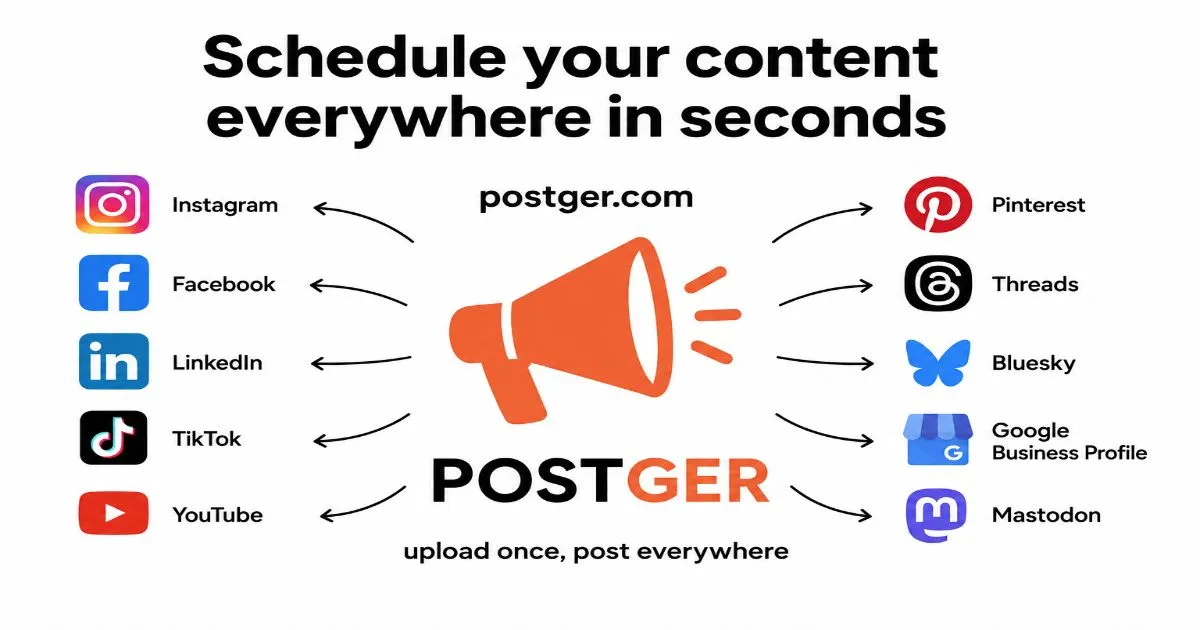
Postger is a social media management platform designed for teams and agencies that need to coordinate content across multiple social networks. The platform provides a unified dashboard for scheduling, publishing, approving, and analyzing posts on Facebook, Instagram, LinkedIn, TikTok, YouTube, Pinterest, Threads, Bluesky, Mastodon, and Google Business Profile. Postger positions itself as a direct API integration tool, meaning it connects natively to each platform rather than using an aggregator, which allows for fuller feature support. The company targets solo creators, growing teams, and agencies managing multiple client accounts. While the website does not explicitly state the founding year, headquarters, or team size, the product appears to be a relatively new entrant in the competitive social media management space, competing with established tools like Buffer, Hootsuite, Later, and Sprout Social. Postger emphasizes ease of use, fair pricing, and human support as its differentiators.
Services & Expertise
Postger offers a comprehensive suite of features for social media management. Below are the core services:
Content Calendar: A drag-and-drop visual calendar allows users to plan and schedule posts across all connected platforms. The calendar supports month, week, and day views, and includes recurring time slots and smart queues for automated scheduling. This feature is central to the platform's workflow.
Multi-Platform Publishing: Users can compose a single post and customize it for each network before publishing. The composer supports media attachments, carousel posts, and per-platform copy adjustments. Direct API connections ensure that platform-specific features (e.g., Instagram carousels, LinkedIn article formatting) are available.
Approval Workflows: Posts can be routed through a review process where managers or clients can approve, comment, or request changes. The client portal provides a branded interface for external stakeholders to review content without needing a Postger account. This is particularly useful for agencies.
Unified Inbox: All comments, direct messages, and mentions from connected platforms are aggregated into a single feed. This allows teams to manage engagement from one place. The Agency plan includes SLA tracking for response times.
Analytics & Reporting: The platform provides per-post and channel-level metrics, including engagement, reach, and growth trends. Users can export reports in PDF or CSV format. Basic analytics are available on the Starter plan, while advanced analytics with trend charts are included in higher tiers.
Idea Board: A Kanban-style board for brainstorming and organizing content ideas. Cards can be moved from brainstorm to draft to scheduled, integrating with the content calendar.
Media Library: A centralized asset repository with folders, tags, and search functionality. This streamlines the management of images, videos, and other media used across posts.
AI & Intelligence Tools: AI-powered content scoring, auto-generated captions, and an open API for AI agents are available on the Agency plan. These tools aim to improve content performance and automate repetitive tasks.
How They Work
Postger operates as a cloud-based SaaS platform. The user journey begins with signing up for a free trial, which provides full access to all features for seven days without requiring a credit card. After registration, users connect their social media accounts via direct API authentication. The onboarding process guides users through setting up their first workspace, adding team members, and exploring the dashboard.
The core workflow revolves around the content calendar. Users can create posts individually or in bulk, schedule them for specific times, and drag them to different dates. For team collaboration, posts can be assigned to specific users and sent through approval workflows. The unified inbox allows teams to respond to comments and messages without switching between platforms.
Postger supports multiple workspaces, which is especially useful for agencies managing different brands. Each workspace can have its own set of connected profiles, team members, and content calendars. The platform also offers smart queues, which are recurring posting slots that automatically fill with content from a queue, ensuring a consistent posting cadence.
For analytics, users can view performance dashboards that track key metrics over time. Reports can be generated and shared with clients or stakeholders. The platform also provides an API for integrating with external tools and automating workflows.
Ideal Client Profile
Postger is best suited for the following scenarios:
A solo creator or freelancer managing up to five social media profiles who needs an affordable tool with a visual calendar and basic analytics. The Starter plan at $17 per month (billed yearly) fits this use case.
A growing team of 2-3 people handling 15 profiles across multiple platforms. The Pro plan at $25 per month (yearly) provides additional workspaces, bulk import, and basic inbox features.
A digital agency managing 20+ client accounts with multiple team members. The Agency plan at $41 per month (yearly) offers unlimited profiles, workspaces, and users, along with approval workflows, client portals, and advanced analytics.
A marketing department within a mid-size company that needs to coordinate content across several brand accounts. The multi-workspace feature allows separate environments for each brand, while team roles and permissions ensure proper access control.
A social media manager who values direct API integrations over aggregator-based tools. Postger's native connections to platforms like Instagram, LinkedIn, and TikTok mean that features such as Instagram carousels and LinkedIn article publishing are fully supported.
Pricing & Engagement Models
Postger offers three pricing tiers: Starter, Pro, and Agency. All plans include a 7-day free trial with no credit card required. The platform uses a subscription model with monthly or yearly billing. Yearly plans offer a 20% discount compared to monthly.
-
Starter: $19 per month or $17 per month billed yearly ($204/year). Includes 5 profiles, 1 workspace, and 1 user. Features include unlimited scheduled posts, 10+ platforms, composer, calendar, media library, carousel posts, Kanban idea board, basic analytics, and email support.
-
Pro: $29 per month or $25 per month billed yearly ($300/year). Includes 15 profiles, 3 workspaces, and 3 users. Adds multiple accounts per platform, content templates, queues, CSV bulk import, basic inbox, analytics with trends, RSS feed subscriptions, and email support.
-
Agency: $49 per month or $41 per month billed yearly ($490/year). Includes unlimited profiles, workspaces, and users. Adds full inbox with SLA tracking, approval workflows, client portal with magic links, custom roles and permissions, advanced analytics with CSV exports, agent API and webhooks, AI intelligence tools, and priority support.
Postger also offers a 14-day money-back guarantee. There are no per-seat fees on the Agency plan, which is a notable differentiator. The platform does not appear to offer enterprise custom pricing or dedicated account management beyond priority support.
Editorial Assessment
Postger presents a compelling value proposition for teams and agencies that need a straightforward, feature-rich social media management tool without per-seat pricing. The direct API integrations are a genuine advantage over aggregator-based competitors, as they provide fuller access to platform-specific features. The visual calendar, approval workflows, and client portal are well-executed and address common pain points for agencies.
However, the platform is relatively new and may lack the depth of analytics and integrations found in more established tools like Sprout Social or Hootsuite. The absence of a mobile app (based on the website content) could be a limitation for users who need to manage social media on the go. Additionally, the Starter plan's limit of 5 profiles may be restrictive for some solo creators with multiple accounts.
Overall, Postger is a strong choice for small to mid-size teams and agencies that prioritize ease of use, flat pricing, and direct platform integrations. Larger enterprises with complex compliance or reporting needs may find the platform insufficient. For those seeking a cost-effective alternative to per-seat pricing models, Postger is worth evaluating. To learn more, check out their pricing or explore the features page for detailed information. The about page provides additional context on the company's mission.