
Overview
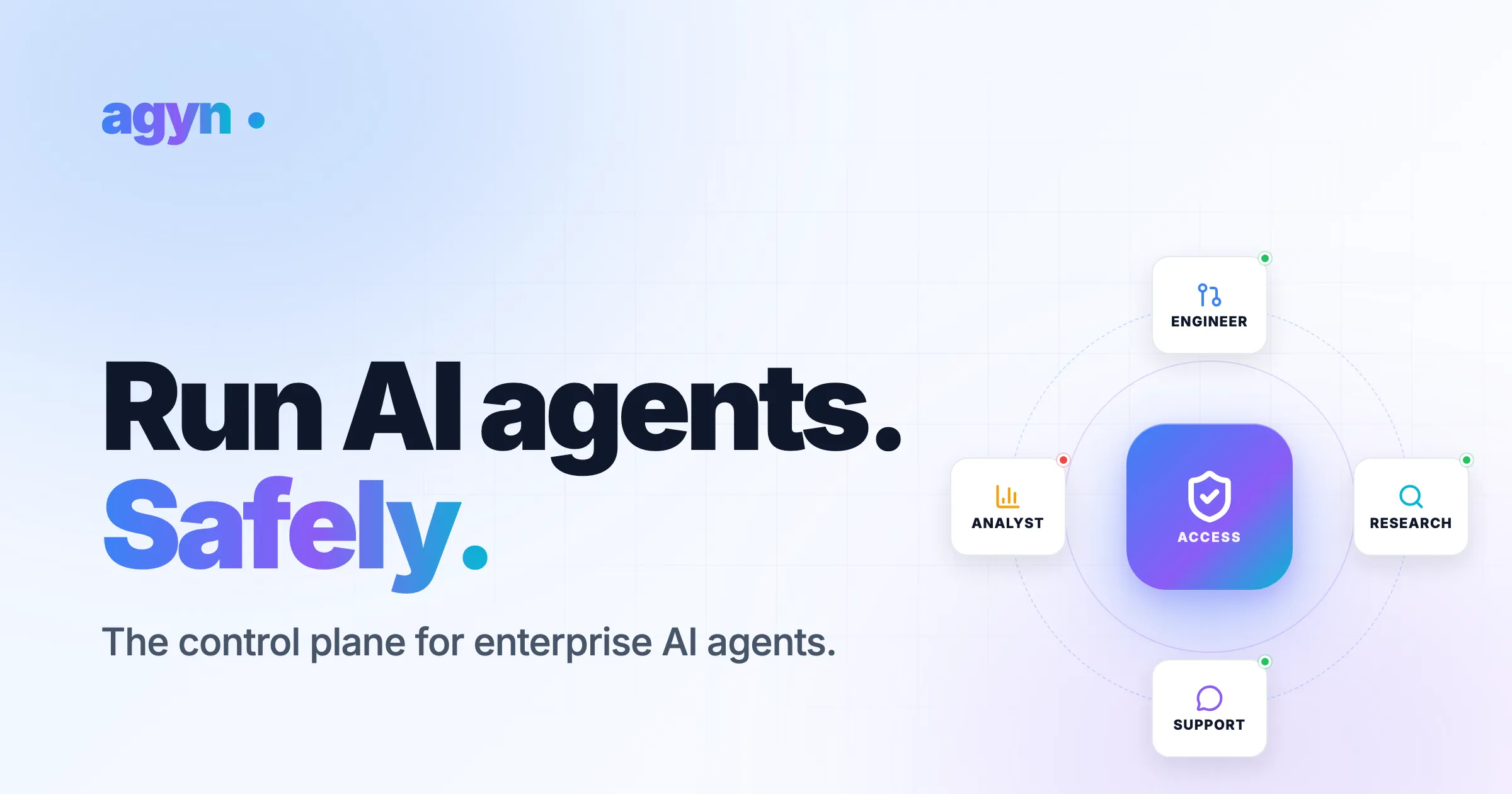
agyn is an enterprise AI agent management platform that provides a secure control plane for deploying, governing, and monitoring AI agents across organizations. The platform addresses the core challenges enterprises face when scaling AI agent usage: security, access control, cost management, and compliance. By offering a Kubernetes-native, open-source solution, agyn enables teams to ship AI agents into private networks, enforce least-privilege policies, and maintain audit trails. The company positions itself as the missing infrastructure layer for enterprise AI adoption, targeting engineering, data science, and operations teams that need to run AI agents safely within their existing IT environments.
Services & Expertise
-
Multi-Environment Deployment: agyn allows organizations to deploy AI agents into any environment, including private networks behind VPNs, VPCs, and firewalls. Agents can reach internal services without exposing them to the public internet, enabling secure access to corporate databases, APIs, and tools.
-
Least-Privilege Security Policies: Every agent action is inspected before execution by a policy agent. Static policies define exactly what each agent can do, preventing unauthorized tool calls, data access, or network requests. Secrets remain hidden from the model, defending against prompt injection and sensitive data leaks.
-
Budget Tracking and Alerts: The platform provides per-agent cost tracking, budget limits, and usage alerts. Organizations can set monthly budgets for teams or agents, monitor spend in real time, and receive notifications when thresholds are approached or exceeded. This helps prevent runaway AI costs.
-
Role-Based Access Control: agyn supports team sharing with granular access controls. Administrators can assign roles (admin, member) to users, control which agents each team can access, and maintain audit logs of all actions. This governance structure scales as adoption grows across departments.
-
GitOps Configuration: Agents, sandboxes, tools, MCPs, skills, and prompts are defined in code using a Terraform-like declarative syntax. This enables version control, peer review, and consistent deployments across environments. Changes are applied through standard CI/CD pipelines.
-
Policy Gate with Real-Time Monitoring: A live dashboard shows every agent action as it is allowed or blocked, with reasons for each decision. This transparency helps security teams understand agent behavior and refine policies over time.
-
Sandboxed Execution Environments: Each agent runs in an isolated sandbox with defined network access and resource limits. Sandboxes can be configured to connect to specific corporate networks, ensuring agents only reach approved services.
How They Work
agyn follows a GitOps-driven workflow. Teams define agent configurations, policies, and sandboxes in code files (e.g., agents.tf, policy.tf) stored in a Git repository. These declarations specify the agent's model, instructions, skills, MCPs, and network access. When changes are merged, agyn applies them automatically, deploying or updating agents in the target environment. The platform then continuously monitors agent actions, enforcing policies before any tool call executes. Administrators can view live activity, adjust budgets, and manage user access through a web dashboard. The entire lifecycle from definition to monitoring is designed to be auditable and repeatable.
Ideal Client Profile
-
A mid-size engineering team that wants to give developers AI coding assistants (like Codex or Claude) access to private code repositories and internal APIs without compromising security.
-
A data science department that needs to run AI agents for data analysis on production databases, but must enforce read-only access and prevent data exfiltration.
-
A customer success organization looking to deploy AI support agents that can read tickets and send emails, but must be restricted from accessing sensitive customer records.
-
A large enterprise with multiple teams (platform, engineering, data science) that needs centralized governance, cost allocation, and audit trails for all AI agent usage.
-
A security-conscious company that wants to adopt AI agents but requires prompt-injection defenses, least-privilege policies, and the ability to block actions that violate corporate policy.
Pricing & Engagement Models
agyn is open-source and free to self-host. The company offers a cloud version (agyn Cloud) with additional enterprise features such as managed infrastructure, premium support, and advanced compliance capabilities. Pricing for the cloud tier is not publicly listed; interested organizations can book a demo to discuss custom plans. The open-source bootstrap script allows teams to get started quickly with a single command, while enterprise features are available through a paid subscription.
Why Consider Them
agyn differentiates itself by focusing on enterprise security and governance from day one. Unlike general-purpose AI agent frameworks, agyn provides built-in policy enforcement, budget controls, and role-based access that are essential for regulated industries. Its Kubernetes-native architecture and GitOps approach align with modern DevOps practices, making it easy to integrate into existing workflows. The platform's real-time policy gate and audit capabilities give security teams confidence to approve AI agent deployments. With support for multiple models (Claude, GPT, Gemini) and compatibility with Codex, agyn offers flexibility while maintaining a consistent security posture.