
Overview
Redstone is a portfolio analytics and optimization platform for individual investors who want quantitative risk information in a single dashboard. The service combines portfolio tracking, stock and ETF screening, peer rankings, and institutional style risk metrics. Redstone reports coverage of more than 3,400 securities, over five years of historical data, and daily data refreshes. It serves self directed investors, students, and quantitative analysts through a browser based product with free and paid tiers.
What They Offer
-
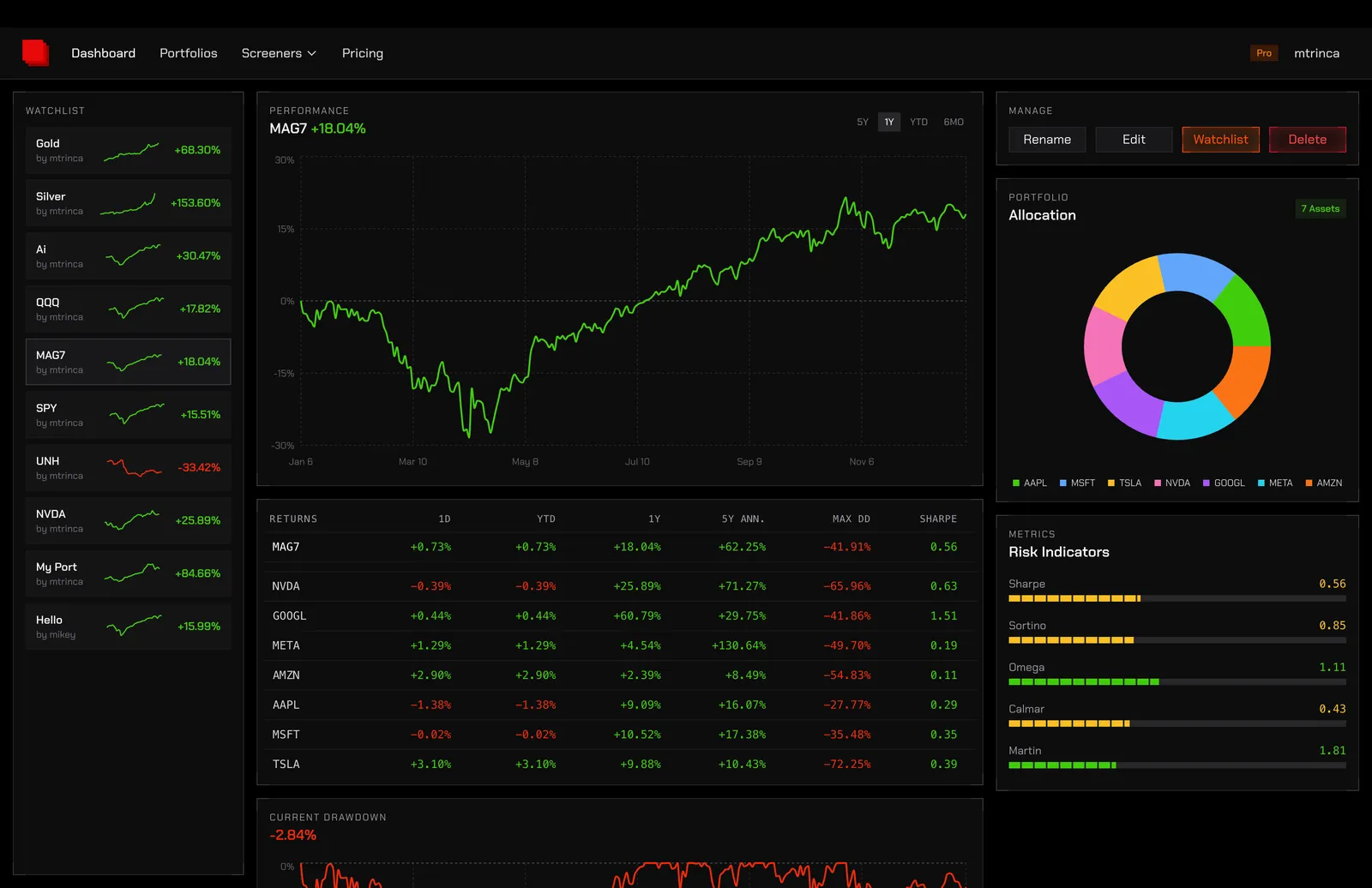
Portfolio tracking and comparison lets users build, monitor, share, clone, and compare portfolios through a dashboard with performance charts, allocation views, watchlists, current drawdown, and side by side ticker or portfolio analysis.
-
Risk and performance metrics include Sharpe ratio, Sortino ratio, Omega, Calmar, Martin, alpha, beta, volatility, maximum drawdown, dividend yield, and other statistics, with summary panels that place returns and risk in peer context.
-
Stock and ETF screeners filter more than 3,400 securities by return, risk, and yield, assign every ticker a score out of 100 against peers, and provide popular ETF comparisons without requiring an account.
-
Portfolio optimization and community examples support plan based optimization limits and let users browse community portfolios, including MAG7, Berkshire Hathaway Top 10, All Weather, and Permanent Portfolio collections, then clone models for further analysis.
-
Tiered access starts with a free Starter plan for five portfolios, ten assets per portfolio, three daily optimizations, 25 watchlist items, and all charts and risk metrics, while Plus at $15 per month and Pro at $50 per month raise limits and add private portfolios, unlimited portfolios, and priority support.
Who They Serve
Redstone targets self directed investors, active traders, students, and quantitative analysts who need portfolio construction and risk review without a full institutional terminal. Typical use cases include comparing ETFs, monitoring watchlists, evaluating model portfolios, and studying risk adjusted returns. Free access suits beginners, while Plus and Pro support frequent traders and power users.